
The Rubber Expansion Joint Market in 2026: Trends, Challenges, and Opportunities
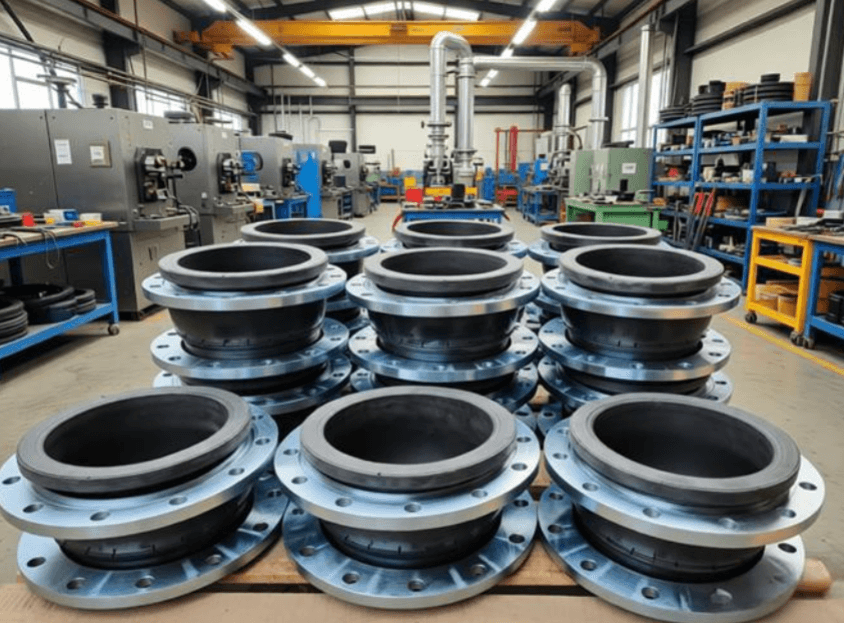
As we look ahead to 2026, the global rubber expansion joint market is poised for significant evolution, driven by technological advancements, industrial demands, and sustainability imperatives. These flexible connectors, designed to absorb vibrations, compensate for misalignments, and mitigate thermal expansion in piping systems, remain indispensable across sectors such as water treatment, oil and gas, chemical processing, and HVAC. Here’s a comprehensive analysis of the market’s trajectory in 2026.
1. Market Growth Drivers
The rubber expansion joint market is projected to expand at a steady pace, with key factors including:
Industrialization and Infrastructure Development: Emerging economies in Asia-Pacific and Africa are investing heavily in water supply networks, wastewater treatment plants, and energy infrastructure, fueling demand for durable piping solutions.
Technological Innovations: Advanced materials like high-performance elastomers and reinforced composites enhance joint longevity and resistance to extreme temperatures, pressures, and corrosive environments. Smart expansion joints embedded with sensors for real-time monitoring are gaining traction in critical applications.
Sustainability Focus: Environmental regulations push industries toward eco-friendly materials. Bio-based rubber and recyclable designs are becoming priorities, aligning with circular economy principles.
Maintenance Efficiency: The shift from reactive to predictive maintenance in industries like oil and gas drives adoption of high-quality joints that reduce downtime and operational costs.
2. Regional Dynamics
Asia-Pacific Dominance: China, India, and Southeast Asia lead market growth due to rapid urbanization and industrial expansion. China’s robust manufacturing base and infrastructure projects make it a pivotal region.
North America and Europe: Mature markets focus on upgrades and replacements, with emphasis on energy efficiency and compliance with stringent environmental standards. The U.S. and Germany are key players in innovation.
Latin America and Africa: Emerging markets offer untapped potential, though growth hinges on political stability and infrastructure investment.
3. Competitive Landscape
The market is fragmented, with global players like Goodyear, Parker Hannifin, and Flexider competing alongside regional manufacturers. Key strategies include:
Product Differentiation: Companies invest in R&D to develop joints with superior flexibility, pressure resistance, and chemical compatibility.
Strategic Partnerships: Collaborations with engineering firms and contractors streamline supply chains and enhance service offerings.
Digital Integration: IoT-enabled joints provide data on performance metrics, enabling predictive maintenance and reducing failure risks.
4. Challenges and Risks
Raw Material Volatility: Fluctuations in natural rubber prices and supply chain disruptions pose cost challenges.
Regulatory Compliance: Adhering to evolving environmental and safety standards increases production complexity.
Economic Uncertainties: Geopolitical tensions and inflation pressures may dampen investment in infrastructure projects.
5. Future Outlook
By 2026, the market is expected to witness:
Increased Adoption in Renewable Energy: Expansion joints will play a vital role in geothermal and solar thermal systems, where temperature fluctuations are extreme.
Customization Trends: Industry-specific solutions (e.g., for pharmaceutical or food processing) will gain prominence, emphasizing hygiene and precision.
Sustainability Leadership: Companies prioritizing green manufacturing and carbon-neutral products will gain competitive edge.
Conclusion
The rubber expansion joint market in 2026 is set for growth, underpinned by industrial progress, innovation, and sustainability goals. While challenges like material costs and regulations persist, opportunities in emerging markets and advanced applications will drive expansion. Companies that invest in technology, customization, and eco-friendly practices will lead the industry forward, ensuring these critical components remain at the heart of modern infrastructure.
JOINTIB has been providing cost-effective and durable rubber expansion joints and duckbill check valves . Our products are very resistant to corrosion and breakage under harsh conditions. For more information about our products, and to inquire about pricing and availability, please contact us today. You can contact us by filling out a form on our website or writing email to sales@jointib.com
Send Your Question
Recent Post
-
Power Generation Plants: The Indispensable Role of Industrial Rubber Joints
-
The Rubber Expansion Joint Market in 2026: Trends, Challenges, and Opportunities
-
Rubber Joint Applications in the Water Treatment Industry
-
Has the price of rubber expansion joints in China increased?
-
Rubber Expansion Joint Manufacturing Process in China

PEW
Hi, I’m the author of this post, and I have been in this field for more than 10 years. If you want to get more info about industrial pipe rubber expansion joints, feel free to ask me any questions.