
Rubber Expansion Joints for Global Industrial Projects: 2026 Compliance, Cost Control & Supply Chain Solutions
In 2026, global industrial procurement teams are facing two intertwined challenges: stricter regional regulatory requirements for pipeline components, and persistent volatility in raw material prices that squeezes project margins. For rubber expansion joint distributors, EPC contractors and end users across water treatment, chemical processing, power generation and HVAC sectors, the priority is no longer just finding a flexible connector that absorbs vibration and thermal movement — it is sourcing a product that checks every compliance box, delivers predictable long-term performance, and avoids supply chain delays that derail construction schedules. This article breaks down the most pressing industry topics shaping the global rubber joint market this year, and offers practical guidance for international buyers navigating these shifts.
1. Navigating 2026’s Top Regulatory & Compliance Trends
Regulatory updates are reshaping purchasing decisions across every major regional market, and non-compliance now means far more than delayed customs clearance — it can lead to full project rework, costly testing fees, or even permanent supplier disqualification.
- EU REACH & PFAS Restrictions: The latest REACH annex updates now expand restricted substance lists for rubber formulations, requiring full traceability documentation for all elastomer materials used in fluid-carrying components. Many small regional fabricators in Europe are unable to absorb the rising cost of third-party testing and certification, creating a gap for certified international suppliers that can provide complete REACH-compliant material dossiers without extra markup.
- North America Potable Water Standards: With the U.S. EPA updating drinking water component safety rules, municipal water and wastewater treatment projects now require NSF/ANSI 61 certification for all rubber expansion joints installed in potable water lines. This has become a non-negotiable specification for 78% of new U.S. municipal tender projects in 2026, according to recent industrial procurement surveys.
- Emerging Market Infrastructure Certifications: For fast-growing markets like India under the Jal Jeevan Mission, Southeast Asian industrial buildouts and Middle East desalination projects, buyers now prioritize products that meet local pipeline safety standards alongside international ISO certifications, to avoid costly re-validation at the project site.
2. Beating Raw Material Volatility Without Sacrificing Quality
Natural rubber, nitrile and neoprene feedstock prices have continued to fluctuate alongside crude oil indices in 2026, putting pressure on both supplier margins and buyer project budgets. The most resilient global procurement teams are moving away from spot-buying single batches of generic rubber joints, and shifting to long-term structured supply partnerships:
- Instead of ordering standard KXT single sphere joints on an as-needed basis, many industrial distributors now lock in 6–12 month pricing frameworks with qualified manufacturers, shielding their inventory costs from sudden market price spikes.
- Leading suppliers are optimizing internal production processes to reduce material waste by 18%, passing those efficiency savings on to buyers rather than cutting corners on rubber layer thickness or fabric reinforcement counts — a common cost-cutting trap that leads to premature joint blowouts in high-pressure piping systems.
- For high-corrosion or high-temperature working conditions, pre-engineered composite rubber formulations are now available as drop-in replacements for more expensive fluoroelastomer options, cutting total component cost by up to 40% while still meeting 10+ year service life requirements.
3. Customization That Solves Real Project Pain Points
Gone are the days when a standard off-the-shelf rubber joint could fit every application. 2026’s most in-demand customizations are built to solve the exact pain points that engineering teams face on site:
- Full-seal anti-tensile flange designs: For buried pipeline projects in seismic zones, these joints add built-in limit tie rods and full-face sealing surfaces that prevent the rubber body from pulling apart under unexpected ground displacement, eliminating the risk of costly underground leaks.
- PTFE-lined seamless inner layers: For chemical processing facilities handling corrosive fluids, the seamless inner rubber layer eliminates the tiny gaps that used to trap process media and cause premature material degradation, extending service life by 2–3 times compared to traditional lined joints.
- Low-temperature resistant formulations: For projects in Northern Canada, Central Asia and high-altitude regions, custom compounded EPDM rubber remains fully flexible at -45°C, avoiding the brittle cracking that plagues standard rubber joints installed in freezing outdoor conditions.
4. Building a Reliable Global Supply Chain for Rubber Joints
Many international buyers learned hard lessons from past supply chain disruptions, and now prioritize suppliers that can deliver both product stability and logistical flexibility:
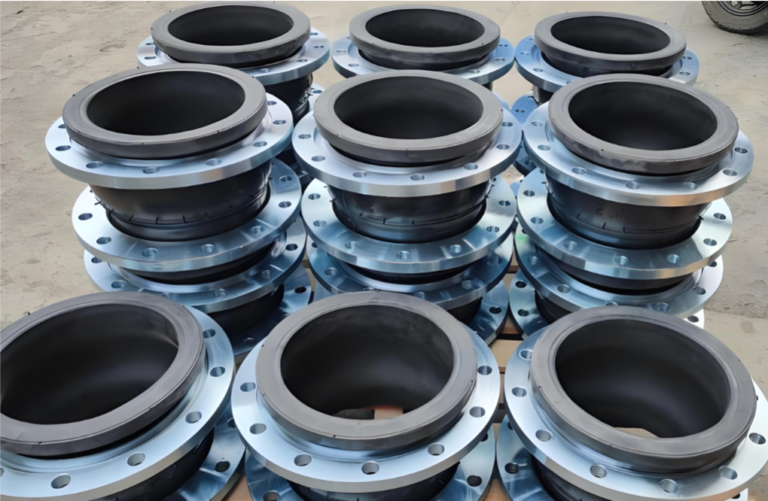
- Our full product line covers every standard configuration from single sphere, double sphere, concentric reducing to angular rubber expansion joints, with full sizes ranging from DN50 to DN2000. We maintain pre-production stock for 80% of the most commonly ordered standard specifications, cutting lead times to as little as 7 working days for small to medium bulk orders.
- We pre-prepare full sets of certification documents, origin paperwork and pre-shipment inspection reports for every order, to ensure smooth customs clearance for destinations across Europe, North America, Australia, Southeast Asia and the Middle East.
- For large EPC project orders, we offer dedicated production scheduling, priority shipping and 24/7 multilingual technical support — including on-site installation guidance if required, to make sure every rubber joint performs exactly as specified once installed.
The global rubber expansion joint market is projected to hit USD 597 million by 2032, and the industry is no longer competing on lowest price alone. It is competing on consistent quality, full compliance, and supply chain reliability that keeps your projects running on schedule. Whether you are stocking inventory for your industrial distribution business, sourcing components for a municipal water project, or looking for custom rubber joints for a special industrial processing application, we can build a tailored supply solution that fits your technical requirements, budget and delivery timeline.
JOINTIB has been providing cost-effective and durable rubber expansion joints . Our products are very resistant to corrosion and breakage under harsh conditions. For more information about our products, and to inquire about pricing and availability, please contact us today. You can contact us by filling out a form on our website or writing email to sales@jointib.com
Send Your Question
Recent Post
-
Rubber Expansion Joints for Global Industrial Projects: 2026 Compliance, Cost Control & Supply Chain Solutions
-
Navigating the Booming Rubber Joints Market: Hot Products and Industry Insights
-
Power Generation Plants: The Indispensable Role of Industrial Rubber Joints
-
The Rubber Expansion Joint Market in 2026: Trends, Challenges, and Opportunities
-
Rubber Joint Applications in the Water Treatment Industry

PEW
Hi, I’m the author of this post, and I have been in this field for more than 10 years. If you want to get more info about industrial pipe rubber expansion joints, feel free to ask me any questions.